CBSE — Class XII — Chemistry Investigatory Project

Ions in Toothpaste To Check the Ions Present in the Toothpaste

Akshit Tyagi
Subject: Chemistry
Session: 2026–27
Student Profile

Student Introduction

About the researcher behind this investigatory project

Akshit Tyagi

Akshit Tyagi

Class XII — Science Stream

Name
Akshit Tyagi
Session
2025–26
Subject
Chemistry
Board
CBSE
Gratitude

Acknowledgement

Heartfelt thanks to those who guided this journey

I would like to express my sincere gratitude to my Chemistry Teacher for their invaluable guidance, constant encouragement, and patience throughout this investigatory project. Their expertise in the subject and insightful suggestions made this project possible.

I am also thankful to our Principal for providing the laboratory facilities and resources necessary for conducting the experiments. The school laboratory was instrumental in the successful completion of this work.

"In the middle of difficulty lies opportunity." — Albert Einstein

I extend my gratitude to my parents and friends who supported me throughout the project and helped me in gathering information and materials. Their moral support was a constant source of motivation.

Finally, I thank the lab assistant for ensuring a safe and well-equipped laboratory environment during the practical sessions.

Official

Certificate

Authentication of this investigatory project

Certificate

This is to certify that Akshit Tyagi, a student of Class XII, has successfully completed the Chemistry Investigatory Project on the topic:

"To Check the Ions Present in the Toothpaste"

during the academic session 2025–26. This project has been carried out under my supervision and is a bonafide record of the work done by the student.

I certify that the project is up to the required standard for submission as prescribed by the CBSE Board.

Teacher's Signature
Chemistry Department
External Examiner
Examiner Signature
Principal
School Seal & Signature
Contents

Index

Navigate through the project sections

S.No. Topic Navigate
01 Cover Page View →
02 Student Introduction View →
03 Acknowledgement View →
04 Certificate View →
05 Index View →
06 Aim View →
07 Introduction View →
08 Materials Required View →
09 Theory View →
10 Experiment / Procedure View →
11 Observations View →
12 Precautions View →
13 Conclusion View →
14 Bibliography View →
Objective

Aim

The core objective of this investigation

To detect and identify the various cations (positive ions) and anions (negative ions) present in a given sample of toothpaste using systematic qualitative inorganic analysis.

Identify Cations (Ca²⁺, Na⁺, K⁺) Identify Anions (CO₃²⁻, PO₄³⁻, F⁻) Confirm via Specific Tests
Overview

Introduction

Understanding toothpaste composition and its chemistry

Toothpaste is a gel or paste-based dentifrice used for cleaning and maintaining oral hygiene. It typically contains a mixture of abrasives, fluorides, detergents, and flavoring agents. These ingredients are formulated with various ionic compounds that serve specific functions.

Key Ionic Components: Most toothpastes contain calcium (Ca2+), sodium (Na+), fluoride (F), phosphate (PO43−), and carbonate (CO32−) ions.

The abrasives such as calcium carbonate (CaCO3) and calcium phosphate help remove plaque. Fluorides like sodium fluoride (NaF) strengthen enamel. Other components like humectants (e.g., glycerol) prevent the paste from drying out, while detergents (e.g., sodium lauryl sulphate) create the foaming action that helps in cleaning. The qualitative analysis of these ions helps us understand the composition and chemical nature of commercially available toothpaste.

Beyond cleaning, toothpaste is a small chemical system where ions stabilize, protect, and remineralize enamel, while surfactants and humectants control texture and spread for use.

Toothpaste and toothbrush
Toothpaste — A daily-use dentifrice with ionic compounds
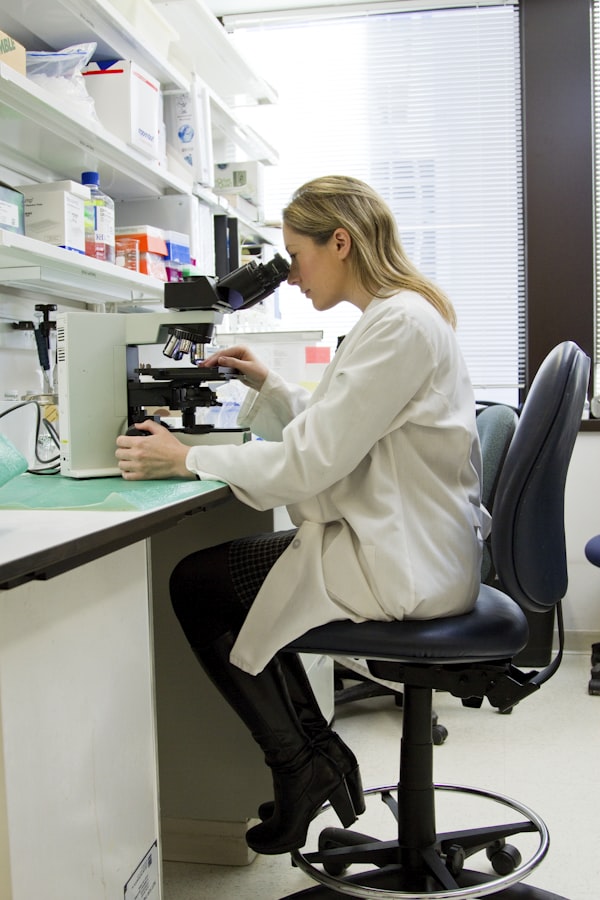
Chemistry laboratory
Laboratory setup for qualitative analysis

Toothpaste Composition Breakdown

Abrasives Water Fluorides Humectants Detergents Others ~50% ~30% ~1–2% ~20% ~2% ~1%
Equipment

Materials Required

Apparatus and chemicals needed for the analysis

🧪 Apparatus

Test Tubes & Stand
Beakers (250 mL)
Bunsen Burner
Filter Paper
Watch Glass
Dropper / Pipette
Spatula
Litmus Paper

⚗️ Chemicals / Reagents

Toothpaste Sample
Dilute HCl
Dilute H₂SO₄
NaOH Solution
Na₂CO₃ Solution
AgNO₃ Solution
BaCl₂ Solution
Ammonium Oxalate
Distilled Water
Conc. HNO₃
Chemistry lab equipment
Test tubes and laboratory glassware used in analysis
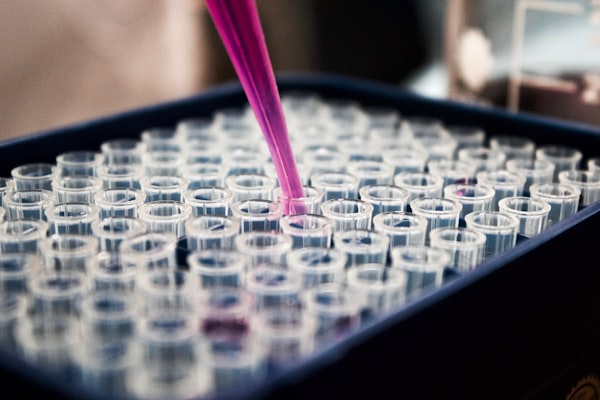
Chemical reagents
Chemical reagents for qualitative analysis
Concept

Theory

The chemical principles behind ion detection

Qualitative inorganic analysis involves the identification of cations and anions in a given sample by performing systematic group-separation tests followed by confirmatory tests. It is based on the principles of solubility product and selective precipitation.

Toothpaste typically contains:
Cations: Ca2+, Na+, K+, Sn2+ (in some brands)
Anions: CO32−, PO43−, F, SO42−, Cl

Qualitative tests rely on equilibrium shifts: adding reagents drives selective precipitation, while complex ions can keep certain cations in solution. Heating accelerates reactions and clarifies color changes. By comparing expected reactions with observed precipitates, we narrow possibilities before confirmatory tests give a final identification for each suspected ion in sample.

The sample is first dissolved in dilute acid to prepare the solution. Anion analysis begins with preliminary tests (e.g., effervescence with HCl suggests carbonates, which are commonly present as abrasives). Cation analysis uses group reagents — HCl, H₂S, NH₄OH, (NH₄)₂CO₃ — to separate ions into analytical groups based on their solubility products, followed by specific confirmatory tests for each suspected ion.

Flame test helps identify Na+ (persistent yellow) and K+ (violet / lilac). Calcium gives a brick-red flame. These visual tests complement the wet-chemical analysis by providing immediate qualitative confirmation.

Ion Classification in Toothpaste

Toothpaste Sample Cations (+) Anions (−) Ca²⁺ Na⁺ K⁺ Brick-red flame Golden yellow flame Violet flame CO₃²⁻ PO₄³⁻ F⁻ Effervescence with dil. HCl Yellow ppt with NH₄MoO₄ White ppt with CaCl₂
Procedure

Experiment

Step-by-step procedure for ion detection

Step-by-Step Procedure

1

Sample Preparation

Take about 5 g of toothpaste in a beaker. Add 50 mL of distilled water and stir thoroughly. Warm gently, filter if necessary, and use the filtrate as the test solution.

2

Test for Carbonate (CO₃²⁻)

Add dilute HCl to the test solution. Brisk effervescence with evolution of a colourless, odourless gas that turns lime water milky confirms CO₃²⁻ ions.

3

Test for Phosphate (PO₄³⁻)

Add concentrated HNO₃ and ammonium molybdate solution to the test solution and heat. A canary-yellow precipitate confirms PO₄³⁻ ions.

4

Test for Fluoride (F⁻)

Add calcium chloride solution. A white gelatinous precipitate of CaF₂ confirms F⁻ ions.

5

Test for Sulphate (SO₄²⁻)

Add dilute HCl followed by BaCl₂ solution. A white precipitate insoluble in conc. HCl confirms SO₄²⁻ ions.

6

Test for Calcium (Ca²⁺)

Add ammonium oxalate to the test solution. A white precipitate of calcium oxalate confirms Ca²⁺ ions. Flame test shows brick-red colour.

7

Test for Sodium (Na⁺)

Perform flame test using a platinum wire dipped in the test solution. A persistent golden-yellow flame confirms Na⁺ ions.

8

Test for Potassium (K⁺)

Perform flame test. A violet/lilac flame (best seen through cobalt blue glass) confirms K⁺ ions.

Lab experiment
Flame test revealing characteristic ion colours
Chemical analysis
Adding reagents for precipitation tests

Experiment Workflow

Sample Prep Dissolve & Filter Anion Tests Cation Tests
Data

Observations

Recorded results from the qualitative analysis

Anion Analysis Results

S.No. Ion Tested Reagent Used Observation Inference
1 CO32− Dil. HCl Brisk effervescence, gas turns lime water milky ✓ Present
2 PO43− Conc. HNO₃ + Ammonium Molybdate Canary-yellow precipitate formed ✓ Present
3 F CaCl₂ solution White gelatinous ppt observed ✓ Present
4 SO42− Dil. HCl + BaCl₂ White ppt insoluble in HCl ✓ Present
5 Cl Dil. HNO₃ + AgNO₃ No curdy white ppt ✗ Absent

Cation Analysis Results

S.No. Ion Tested Method / Reagent Observation Inference
1 Ca2+ Ammonium Oxalate + Flame Test White ppt; Brick-red flame ✓ Present
2 Na+ Flame Test Persistent golden-yellow flame ✓ Present
3 K+ Flame Test (Cobalt blue glass) Violet / Lilac flame ✓ Present
4 Mg2+ NaOH excess No white ppt observed ✗ Absent

Ion Detection Summary

Ca²⁺ ✓ Found Na⁺ ✓ Found K⁺ ✓ Found CO₃²⁻ ✓ Found PO₄³⁻ ✓ Found F⁻ ✓ Found SO₄²⁻ ✓ Found Cl⁻ ✗ Absent
Safety

Precautions

Safety measures to follow during the experiment

🥽
Always wear safety goggles and a lab coat while performing experiments with acids and chemicals.
🧪
Handle concentrated acids (HCl, HNO₃, H₂SO₄) with extreme care. Use a dropper and avoid direct contact with skin.
🔥
Use the Bunsen burner carefully during flame tests. Keep flammable materials away from the flame.
💧
Use only distilled water for preparing solutions and cleaning apparatus to avoid contamination.
🧹
Clean all test tubes and apparatus thoroughly before use to prevent errors from residual chemicals.
📏
Use small quantities of reagents. Excess reagents can interfere with test results and produce ambiguous observations.
🚫
Do not taste or smell any chemical directly. Use the wafting technique to detect odours.
📝
Record all observations immediately after performing each test. Do not rely on memory.
Result

Conclusion

Summary of findings from the investigation

Through systematic qualitative analysis, the following ions were successfully detected in the toothpaste sample:

Ca²⁺ Na⁺ K⁺ CO₃²⁻ PO₄³⁻ F⁻ SO₄²⁻

These ions originate from ingredients like calcium carbonate (abrasive), sodium fluoride (anti-cavity agent), sodium lauryl sulphate (foaming agent), and calcium phosphate (remineralizer). The presence of carbonate and phosphate ions primarily contributes to the cleaning and polishing action, while calcium and fluoride ions play a crucial role in enamel remineralization and cavity protection. Overall, the experiment confirms that toothpaste is a complex mixture of several ionic compounds carefully balanced for effective oral care and hygiene.

References

Bibliography

Sources and references used in this project

class-12-hhw.pages.dev — Class 12 Holiday Homework Reference Portal NCERT Chemistry Textbook — Class XII, Part I & II
Laboratory Manual — Chemistry Practical for Class XII (CBSE)
Comprehensive Practical Chemistry — Dr. N.K. Verma (Laxmi Publications)
ScienceDirect — Research articles on toothpaste chemical composition