K A L A M

A True Story of Love, Dignity & India

When the Palace Opened Its Doors for the Children of India

The Unforgettable Day Dr. A.P.J. Abdul Kalam Made Every Child a King and Queen

Date 15 August 2003
Location Rashtrapati Bhavan
Children Hosted 500 VIP Guests
President Dr. A.P.J. Abdul Kalam
Scroll
Rashtrapati Bhavan
Rashtrapati Bhavan, Raisina Hill, New Delhi — The Palace That Opened Its Heart
01
Prologue

A President Unlike Any Other

Dr Kalam inspiration
Rameswaram · Tamil Nadu
Prologue

The Boy from Rameswaram

There is a particular kind of greatness that does not announce itself with trumpets. It arrives quietly, in the middle of the night, with worn-out sandals, a crumpled notebook, and a heart so full of love for humanity that it simply cannot contain itself within the walls of protocol and prestige.

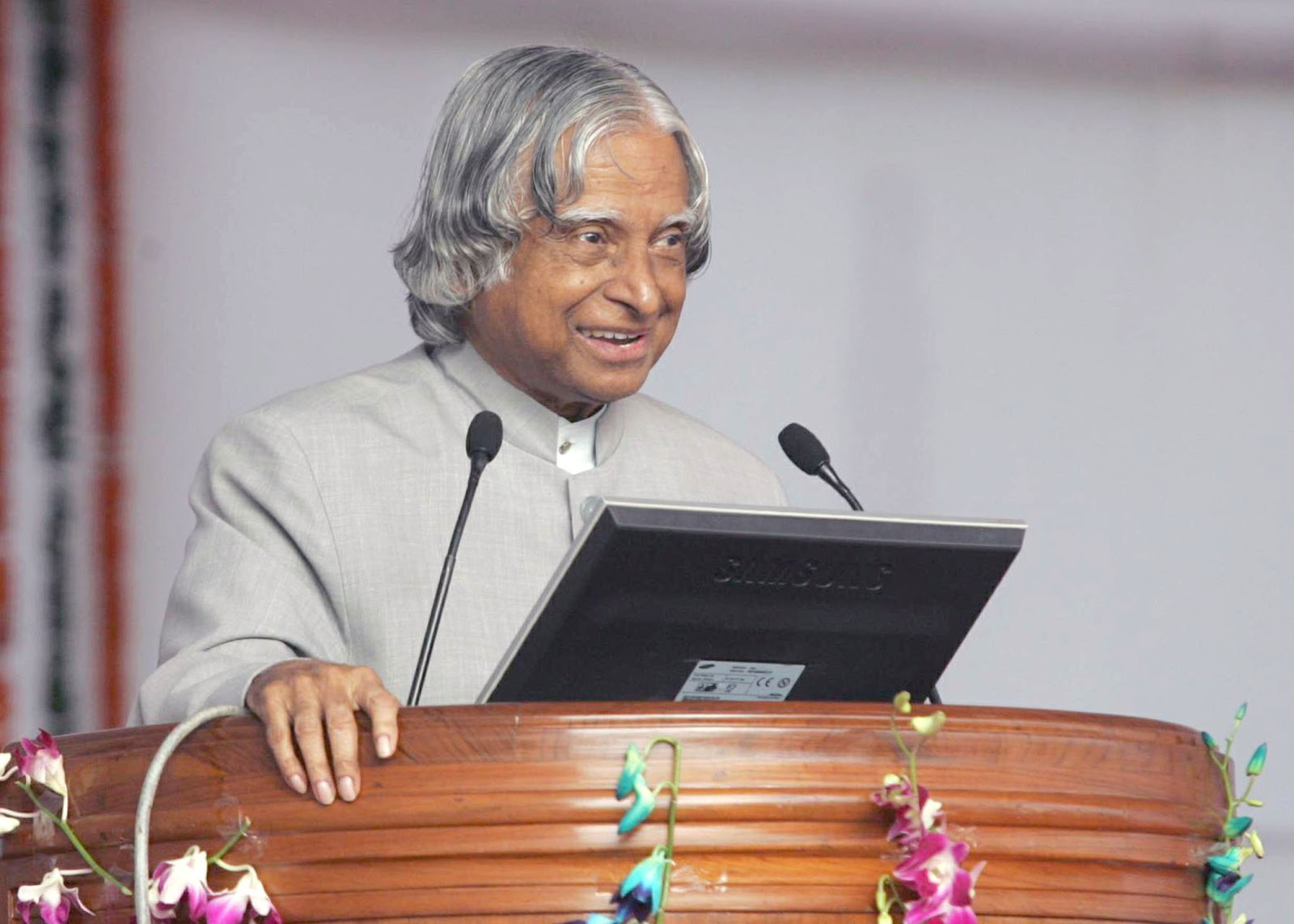
Dr. Avul Pakir Jainulabdeen Abdul Kalam — scientist, dreamer, poet, and the 11th President of the Republic of India — was exactly that kind of man.

From the moment he stepped into Rashtrapati Bhavan on 25th July 2002, having been sworn in as the President of India, the people of this great nation knew something had changed. Not just politically, not just symbolically — but spiritually.

For the first time in the history of free India, the highest office in the land was occupied not by a politician, not by a general, not by a dynasty's heir — but by a boy who had once sold newspapers on the streets of Rameswaram, Tamil Nadu, just to help his family survive.

— The People's President

He had risen. And he had never — not once — forgotten where he had come from.

"This is the story of one extraordinary day. A day that became legend. A day when the most powerful address in India — Rashtrapati Bhavan, New Delhi — was turned, entirely and joyfully, over to the children."
15th August, 2003 — Independence Day
02
Part One

The Idea That Changed Everything

Indian children studying
India's Invisible Millions
Part One

A Dream Born in the Quiet of Dawn

It was the summer leading up to 15th August 2003 — India's 57th Independence Day. All across the country, preparations were underway. Flags were being ironed, speeches were being rehearsed, and government offices were buzzing with the usual pomp and formality that accompanies the nation's greatest annual celebration.

Inside the grand corridors of Rashtrapati Bhavan — that magnificent 340-room palace spread across 130 hectares on Raisina Hill, designed by the legendary British architect Sir Edwin Lutyens — staff members were busy preparing for the traditional Independence Day protocols. Foreign dignitaries were to be received. Senior government officials would attend.

But Dr. Kalam had a different idea entirely.

He had been thinking, as he often did in the quiet of the early morning — about the children of India. He thought about the children in the villages of Bihar who had never owned a pair of shoes. He thought about the little girls in the slums of Mumbai who studied under streetlights because their homes had no electricity. He thought about the boys in the tribal belts of Jharkhand and Chhattisgarh who had never once seen a building taller than two floors.

"I want to invite the children. Bring them here. Treat them as our most important guests. Make them feel like they own this country — because they do."

— Dr. A.P.J. Abdul Kalam
04
Part Four

The Royal Feast

Royal banquet table
The Banquet Hall — Where Kings Had Dined
Part Four

A Table Fit for Every Child

The Banquet Hall of Rashtrapati Bhavan is a room of extraordinary grandeur. Its soaring ceilings, grand chandeliers, immense polished dining tables, and elegant silverware have hosted the most powerful human beings on Earth. Presidents of the United States, Prime Ministers of Great Britain, Emperors, Kings, Queens — all have sat at this table.

On 15th August 2003, it was the children's turn.

The tables had been set with the same meticulous care that was reserved for state banquets. Fresh flowers adorned the centre of each table. Crystal glasses sparkled in the light of the chandeliers. White linen tablecloths — so bright and clean they seemed to glow — were laid out across the length of the hall.

Course after course of food arrived — prepared by the finest chefs of Rashtrapati Bhavan. There were rich curries, fragrant biryanis, fresh breads, sweets and mithai of every kind — laddoos, kheer, gulab jamun, jalebi — piled generously on every plate. There were cold drinks and fresh juices, fruits arranged in ornate bowls, and desserts that some of these children had perhaps only ever seen in pictures.

For many of these 500 children, this was — without any exaggeration — the most elaborate, most generous, most beautiful meal of their entire lives. But the food was not the most important thing on the table. The most important thing was the dignity with which it was served.

— The Greatest Feast

No child was made to feel out of place. No child was looked down upon. No child was reminded — not even subtly, not even accidentally — of the gap between their world and this one.

05
Part Five

The Man Himself

Teacher with children
Dr. Kalam — The People's President
Part Five

He Sat With Them

And then Dr. Kalam walked in. There are moments in history that are difficult to describe in the flat, ordinary language of words. This was one of them.

He did not walk in with bodyguards forming a tight wall around him. He did not come in to the sound of formal announcements. He walked in — this small, gentle man with his white hair swept back and his warm, crinkled eyes — and he went directly to the children.

He sat with them. He pulled up a chair and sat down among them, at their level, as if there were nowhere in the world he would rather be. He asked their names. He asked where they were from. He asked what they wanted to be when they grew up. He listened — not the way politicians listen, with half their mind on the next meeting — but really, truly listened, his eyes alive with genuine interest.

A young boy from Darbhanga, Bihar — perhaps 11 years old — told Dr. Kalam that he wanted to become a scientist someday. Dr. Kalam's face lit up like a child's on a festival morning. He clasped the boy's hands in both of his and said, with absolute conviction, "You will. If you dream it and you work for it, you absolutely will."

— A Moment That Lives Forever

He spent time with child after child, group after group. He spoke to them in Hindi, in Tamil, in simple English — whatever felt most natural, most warm, most human. He told them stories — stories of his own childhood in Rameswaram, of selling newspapers at the crack of dawn, of dreaming of aeroplanes when he could barely afford his school books.

"Don't ever think this place is not for you. This is your home. India is your home. And India needs you."

— Dr. A.P.J. Abdul Kalam

Several children, and more than a few of the accompanying adults, quietly wiped their eyes.

06
Part Six

The Afternoon, the Photographs, and the Farewell

Indian architecture corridor
Walking the Corridors of History
Part Six

A Day Stored in the Soul

The celebrations continued through the afternoon. The children were taken on a guided tour of parts of Rashtrapati Bhavan — its grand hallways, its historical rooms, its gleaming architecture that told the story of India's long, complex, layered past. They walked through the same corridors that Jawaharlal Nehru and Sardar Vallabhbhai Patel had once walked through, breathing the same air, touching the same walls.

Photographs were taken — group photographs, individual photographs, photographs with Dr. Kalam that each child would carry home as the greatest treasure of their young lives. Many of those photographs would end up framed on the walls of humble homes in villages and small towns across India, placed beside images of gods and ancestors — because for these families, this day was nothing short of sacred.

As the sun began to descend over New Delhi and the golden hour light fell in slanting shafts across the Mughal Gardens, the children slowly began to say their goodbyes. Some of them didn't want to leave. A few sat very still, as if trying to absorb every last detail of the place through their skin — the smell of the flowers, the coolness of the marble, the sound of fountains — storing it somewhere deep inside themselves so they could return to it later, on hard days, and remember.

Dr. Kalam stood at the gates to see each group off. He shook hands. He blessed the children, placing his hand gently on their heads. He whispered encouragements. He waved until the last group had disappeared from sight.

07
Epilogue

Why This Day Will Never Be Forgotten

Historians and biographers who have studied the life of Dr. Kalam often point to this day — 15th August 2003 — as one of the most quietly powerful acts of his presidency. Not because of any policy it changed or any law it amended. But because of what it meant.

In a country that had spent centuries — millennia, in many ways — conditioning people to know their place, to stay in their lane, to not reach for things that were deemed beyond their station, Dr. Kalam had done something profoundly, almost radically democratic. He had taken the single most powerful symbol of the Indian State and placed it at the feet of its most powerless people. He had set a table in a palace and invited the children who were never supposed to sit there.

He had looked at 500 children — poor children, ordinary children, children with calluses on their hands and dust in their hair — and said:

You matter. You are important. You are not invisible. You are the reason this country exists.

That is not a small thing. That is, in fact, everything.

Dr. A.P.J. Abdul Kalam passed away on 27th July 2015, doing what he loved most — speaking to young students at the Indian Institute of Management in Shillong, Meghalaya. He collapsed while delivering a lecture, and died shortly after. He was 83 years old.

But the boy from Rameswaram who sold newspapers, who dreamed beneath the stars, who built rockets for his country and then threw open the doors of the highest palace in the land for its most forgotten children — that boy never really died.

He lives in every child who ever looked up at a sky too big and too beautiful for fear, and decided — despite everything — to dream anyway.

"You have to dream before your dreams can come true."

— Dr. A.P.J. Abdul Kalam · Bharat Ratna · 15 October 1931 – 27 July 2015

This tribute was crafted by
Akshit Tyagi
Made By Akshit Tyagi

Dedicated to the People's President — and to every child who dares to dream.